How to Read a Storm
To read a storm is to map the structure of a cyclone and to understand its excess heat as inseparable from four centuries of extractivism.
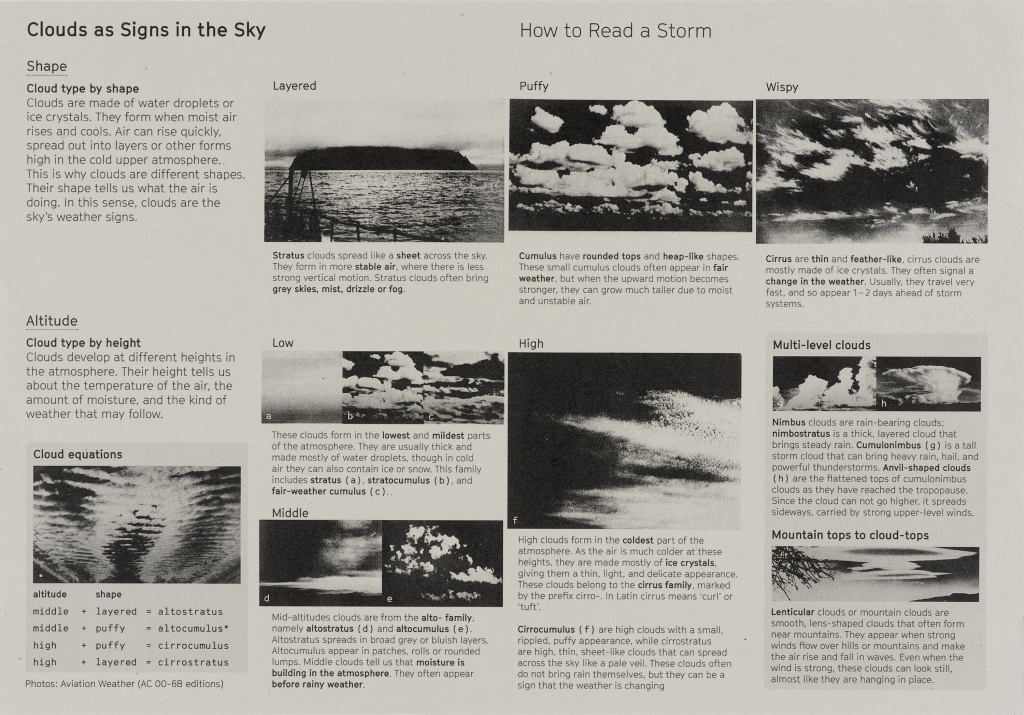
Series of education resources created in collaboration with meteorologist Vinitia Deshmukh, shown opposite a photographic print of the only surviving images of a wire model of the so-called Norwegian Cyclone Model, thought to have been made by scientist Jacob Bjerknes circa 1920. The theory and its ‘ideal cyclone’ remain foundational to modern meteorology and are why we talk about ‘weather fronts’ – an analogy drawn from WW2 trench warfare.
Education resources developed in collaboration with meteorologist Vinitia Deshmukh, University of Vienna, for Echo Correspondence and Klima Biennale Wien.
Photograph taken inside the office of the Director of the Bjerknes Centre for Climate Research, Bergen, with the assistance of scientist Ellen Viste.
Render of 3D model produced by designer Anna Lebedieva on the occasion of a workshop with students of the Non Linear Narrative Masters at The Royal Academy of Art, the Hague.
The first How to Read a Storm workshop was commissioned by Bergen Centre for Electronic Arts and developed in collaboration with climate scientist Camille Li from the Bjerknes Centre for Climate Research, meteorologist Ellen Viste. The concept for the workshop was informed by Bergen’s wet location at the end of the Jet Stream and special place in meteorology as home of the so-called Norwegian cyclone model, we spent the day assembling different knowledges of storm systems.